Node.js for Web APIs
Master how to design and implement reliable, production-grade web APIs with Express, Sequelize and the 3-layer architecture.
🔥
This course is an excellent resource for junior backend developers who want to learn an end-to-end method for building modern applications with Node.js.
Camille B
Backend Developer
🚀
The projects are practical, scoped, and cover essential software pieces. These are not just toy examples, they're small, production-shaped problems.
Francois P
Senior Backend Developer
✌️
This course gives a realistic view of how backend works. It goes all the way through routing, middleware, validation, error handling, and more... That's how backend should be taught.
Adrien B
Senior Backend Developer
What Makes an API "Production-Ready"
Building real APIs requires more than just slapping together a few routes...
It requires structure, validation, request parsing, rate limiting, business rules, data constraints, failure handling, and persistence.
And that's where most developers hit a wall.
You can get an endpoint working from a tutorial, but once the API starts growing, things get messy fast: input is inconsistent, errors are scattered, logic leaks into routes, and database code ends up everywhere.
This course is designed to close that gap.
You'll start with the fundamentals of HTTP and Express, then move into the parts that make an API reliable in practice: middleware, parsing, validation, error handling, database persistence, and layered architecture.
By the end, you won't just know how to define routes — you'll know how to build a Node.js API that stays clean, predictable, and maintainable as it grows.

What & How You'll Learn
Fuhgeddaboud "Hello World" servers. Learn how to build reliable and maintainable web APIs that back real online projects.
Build API endpoints that return predictable, consistent responses.
Handle requests cleanly with routing, middleware, and validation.
Prevent crashes by handling errors the right way.
Store and retrieve real application data with a database.
Structure your backend into clear layers you can maintain and extend.
Build a backend foundation you can reuse across future API projects.
The learning process

- 1
Gradual concept introduction
Each lesson introduces one main concept at a time in a clear, controlled order, so you understand what you're doing before combining it with other moving parts. This keeps the learning curve steady and helps you build real confidence instead of patchy knowledge.
- 2
Code snippets breakdown
Before writing full programs, you'll study focused code snippets that isolate the concept and show exactly how it works in practice. This makes the logic easier to understand and gives you a mental model you can reuse later.
- 3
Guided project build
You'll apply what you just learned in a guided project that turns isolated concepts into working code. This is where the lesson becomes practical and the skills start to stick.
- 4
Solution walkthrough
After building the project yourself, you'll review a complete solution to compare approaches, catch mistakes, and understand better patterns. This helps you learn faster than trial-and-error alone and reinforces how the pieces fit together.
- 5
Reusable takeaways
Each concept, pattern and idea is carried into the next lesson and project so you don't start from zero every time. That's how you build momentum and turn practice into long-term backend skills.

What You'll Build
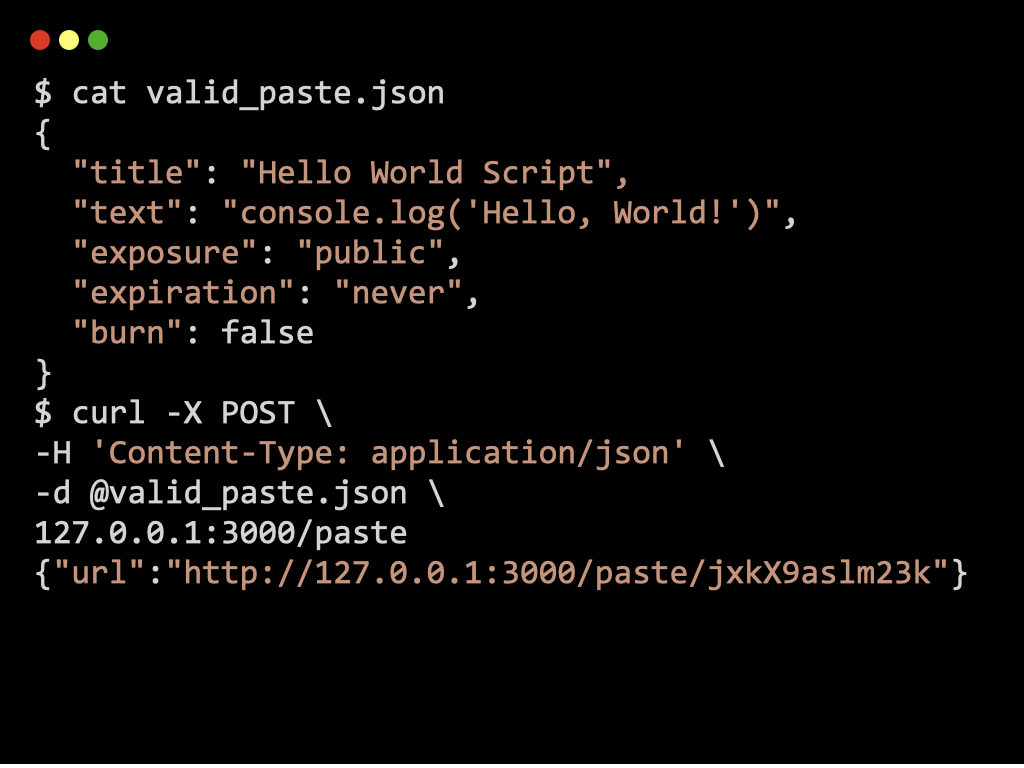
These projects are designed to train the exact skills used in real backend work, from request handling and validation to persistence, routing, and response design.
Here's a shortlist of the projects you'll build:
Recipe API
Lorem Ipsum Generator API
CSV to JSON Converter API
URL Shortener API
Short Note Saver API
Voting System API
Link Sharing API

The Course Curriculum
Here's an overview of this course organized by module.
Craft APIs With Express
14 lessons · 7 projects
In this module, you'll learn how to build production-style HTTP APIs with Express, including routing, middleware, parsing requests, validation, consistent errors, and documentation, plus the web fundamentals like HTTP, REST, and cURL needed to design predictable endpoints.
Connect to Databases With Sequelize
8 lessons
In this module, you'll learn how to model and query relational data with Sequelize by defining models, filtering and aggregating records, creating relationships, and loading associated data so your APIs can persist and retrieve real application state.
The Three-Layer Architecture
10 lessons · 1 projects
In this module, you'll learn how to structure an Express API with clear boundaries using router, service, and data-access layers, then centralize configuration and error handling to build scalable codebases that stay testable and maintainable as features grow.
[Bonus] Store & Query Data With MySQL
11 lessons
In this module, you'll learn how to design and query relational databases with MySQL, including tables, columns, keys, relationships, and SQL queries, so you can store and retrieve application data reliably in your backend projects.
Why This Course Is Text-First
This course is text-first on purpose — and I strongly believe it's the best way to learn backend development.
Backend code is easier to learn when you can read it, search it, copy it, and run it as you go.
Written lessons let you find a concept instantly with your browser search, jump back to the exact section you need, and copy code directly from the page without digging through video timelines or separate downloads.
That makes the course more than something you watch once. It becomes a practical reference you can keep using like documentation while you build your own scripts, tools, and APIs.
The result is simple: less time scrubbing, more time coding, and lessons you'll still use after the course is done.
Start Building Web APIs With Node.js Today
Get lifetime access to this course and all future updates — 30-day money-back guarantee.
The Money-Back Promise
We want this investment to be an absolute no-brainer for you.
If for whatever reason you aren't 100% satisfied with your experience, send us an email within the first 30 days of purchase at support@learnbackend.dev and we'll refund your entire payment.
No hard feelings. No questions asked.
F.A.Q.
What's the format of the course?
Lessons are text-based and project-driven. You'll read focused explanations, study runnable code, and build each API locally on your machine.
Who is this course for?
This course is for developers who already know JavaScript and want to learn how to build real backend APIs with Node.js.
Do I need to know Node.js already?
Yes. You should already be comfortable with Node.js fundamentals, and it helps if you've worked through the CLI track first.
Will I learn just Express routes, or real backend structure too?
You'll learn both. The course covers Express fundamentals, but it also teaches validation, error handling, database access, and a layered architecture so your API code stays maintainable.
Does the course include a database?
Yes. You'll use Sequelize to connect to a relational database, define models, validate data, and query records, so your APIs work with real persisted data.
Does this cover async code, or only basic CLI input/output?
It covers both. You'll learn async fundamentals (event loop, promises, async/await) and apply them in CLI projects that handle timers, streams, and file operations.
How long does it take to complete this course?
It depends on your pace, but a realistic range is 1-3 months if you code regularly. The projects are where most of the time goes, and they are the point of the program.
Is there coaching or mentoring?
Not at launch. The program is designed to be self-serve, and support options can be introduced later depending on demand.
Does the course work on all operating systems?
It is designed to work on Linux-based and macOS operating systems. These environments are essential for learning backend development effectively, as they align with industry standards and provide the necessary tools and features. However, if you're using Windows, we recommend setting up the Windows Subsystem for Linux (WSL) on your machine to follow along.
I've got more questions, how can I reach you?
You can send us an email at support@learnbackend.dev and we'll get back to you within 1-2 business days.