Welcome to Node.js for Web APIs
Startup·4 min read·Jan 27, 2026
Hi 👋
If you're reading this, you probably want to build web APIs that feel real, not just a few Express routes that "work on localhost".
Building production-ready APIs requires more than slapping together endpoints. You need structure, validation, parsing, constraints, failure handling, persistence, and code organization that stays clean as the API grows.
That's why I created Node.js for Web APIs — a practical, project-driven course that teaches you how to design and build reliable APIs with Express, persistence with Sequelize, and a simple layered architecture.
About this course
This course is delivered as text-based lessons and hands-on projects.
It follows a clear progression, from understanding HTTP and Express fundamentals, to building real endpoints, to adding middleware-based validation and error handling, to persisting data with a database, to structuring your code with clean layers.
Each lesson focuses on one concept at a time, gives you runnable code snippets, and helps you form the right mental model.
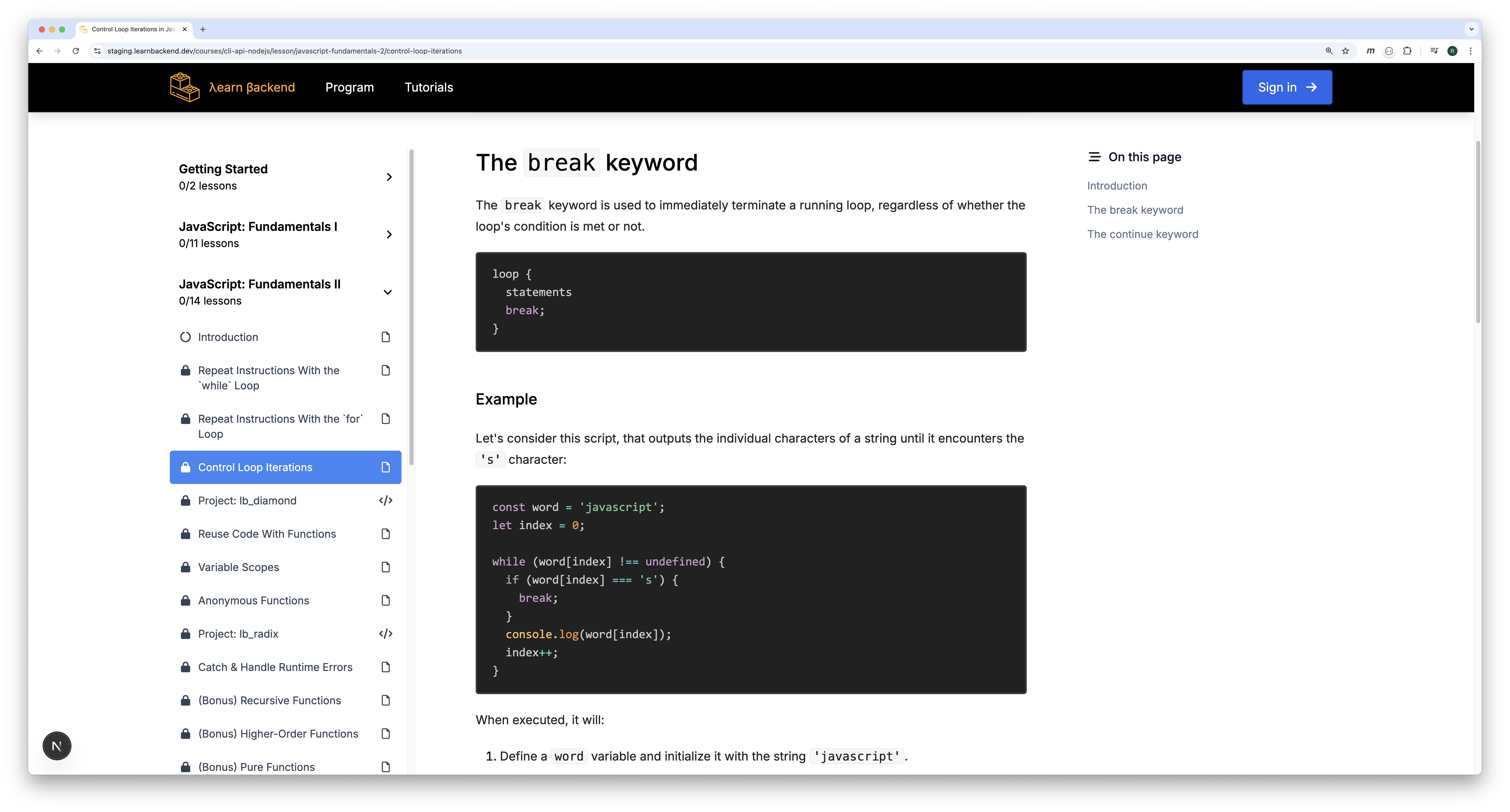
Every few lessons, you'll build a real script that forces the concept to stick—because reading is not learning, practice is.
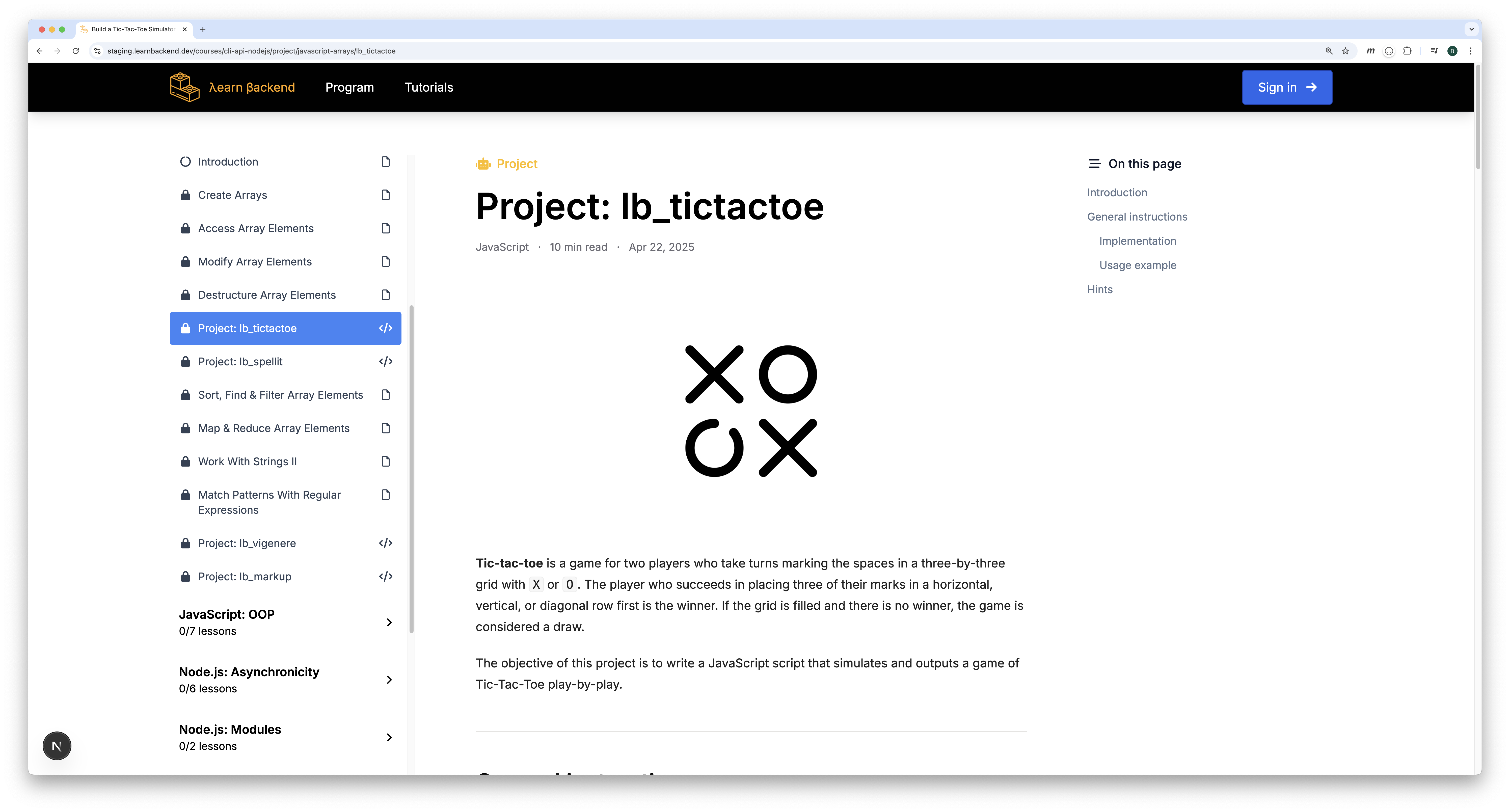
Each project also comes with a commented, ready-to-study solution walkthrough, so you can compare approaches and pick up reusable patterns.
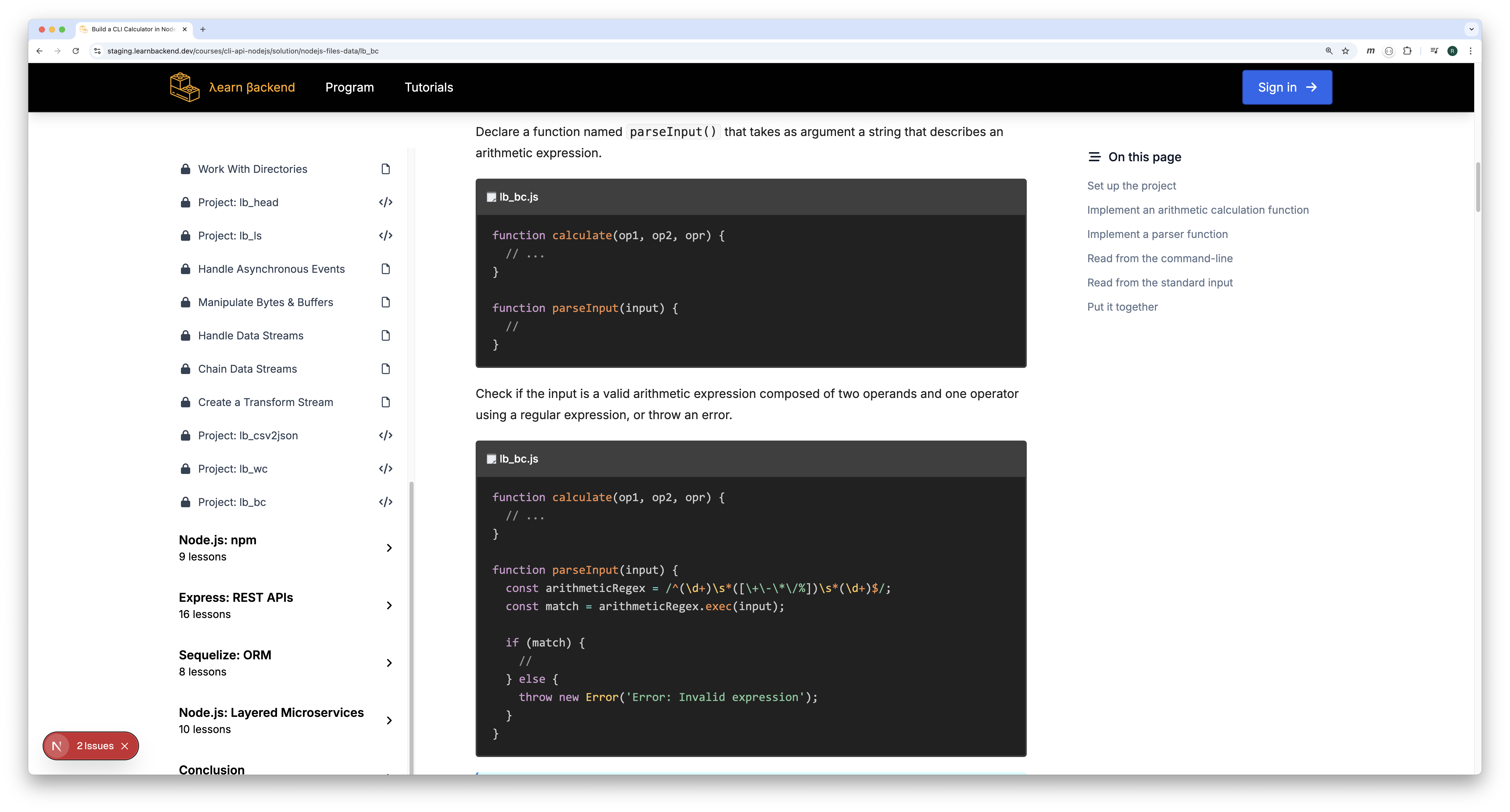
👉 Feel free to explore the course content using the lessons and projects in the left-hand menu.
What you'll build
Along the way, you'll build multiple APIs that cover the real surface area of backend work: request handling, validation, routing, errors, persistence, and structure.
Here's a shortlist of projects you'll build:
- Lorem Ipsum API — generate text using query parameters.
- CSV ↔ JSON Converter API — convert request payloads cleanly.
- Recipe API — retrieve data using route parameters.
- URL Shortener API — redirect clients with proper HTTP behavior.
- Pastebin API — store and retrieve text snippets by id.
- Polling API — create polls, vote, and retrieve results.
- Link-in-Bio API — serve a profile with a list of links.
How to use the course effectively
Take the modules in order.
👉 Each lesson builds the runtime instincts you need for the next projects.
For every lesson:
- Read the lesson from top to bottom.
- Run each example on your machine.
- Change the inputs and re-run it.
- Break it on purpose.
- Fix it and rerun it.
For every project:
- Read the requirements from top to bottom.
- Study the API contract and example requests.
- Implement the simplest working version first.
- Handle invalid input and failure cases.
- Refactor into clearer structure and predictable errors.
👉 Your goal is not "more endpoints". Your goal is a backend you can trust.
Getting help and updates
This course is updated iteratively based on feedback.
If you find a typo, a broken link, or an unclear instruction: report it.
You can reach out to us via email at: support@learnbackend.dev
And with that being said, happy building!